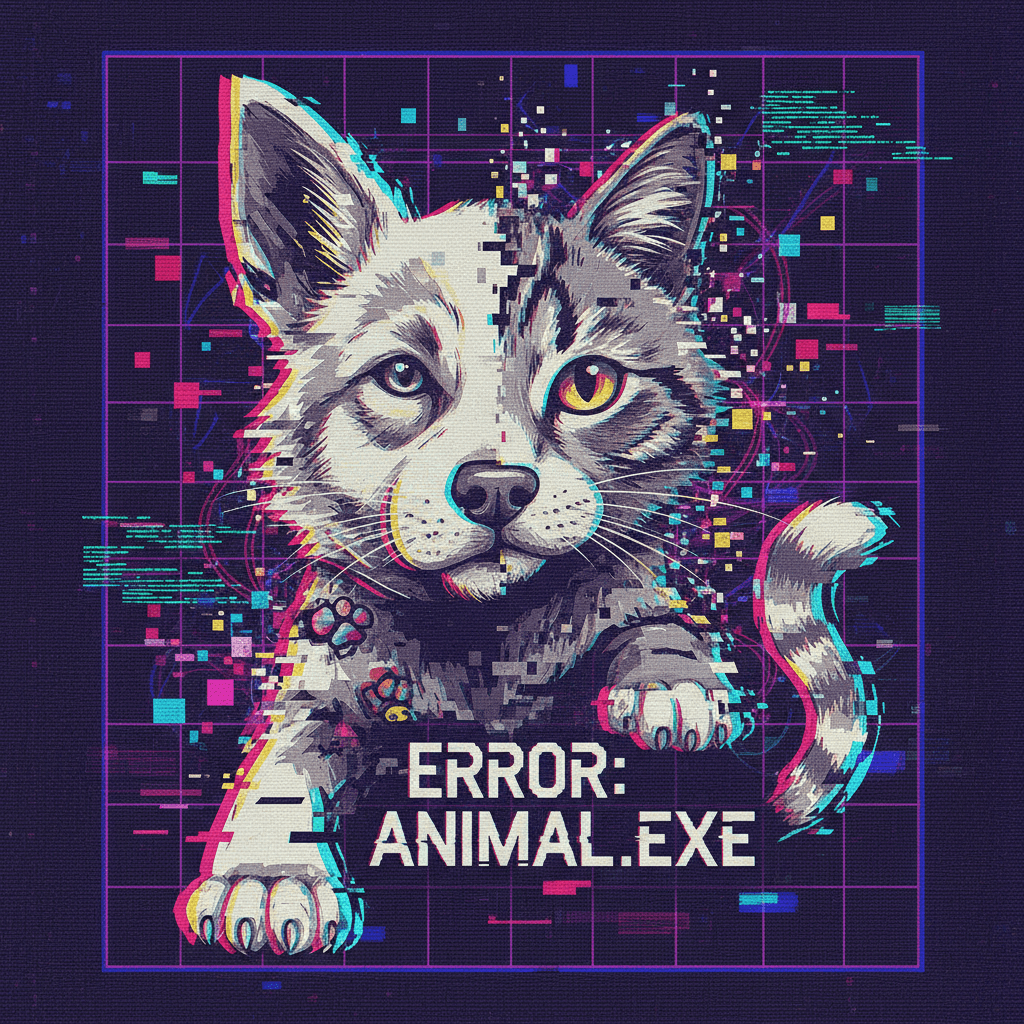
Alright, buckle up, buttercups! The Vibe Coder is ON, dialed into max fun, and ready to drop some truth bombs wrapped in a Nano Banana aesthetic. We're diving headfirst into the wild world of macOS, AI, and everything in between. Let's do this!
Key Takeaways
- The Big Shift: How Agentic AI is changing the game.
- Actionable Insight: Immediate steps to secure your AI Privacy.
- Future Proof: Why Local LLMs are the ultimate privacy shield.
THE COVER STORY: OpenAI Announced GPT-5.2 (Garlic)
Hold onto your hats, folks! OpenAI just dropped GPT-5.2, codenamed "Garlic," and the AI world is buzzing like a Nano Banana convention. This isn't just another incremental update; it's a full-blown strategic power-play against the likes of Google's Gemini and Anthropic's Claude. Word on the street (or, you know, the internet) is that CEO Sam Altman himself called a "code red" to fast-track this release.
So, what makes GPT-5.2 "Garlic" so spicy? Well, for starters, it boasts a whopping 400,000-token context window and a 128,000-token output capacity, that's like giving the model the ability to remember and regurgitate entire freakin' codebases or technical manuals in one go! It's designed for enterprise development and complex agentic systems. This bad boy is built for professional knowledge work, with early testing showing that ChatGPT Enterprise users save an average of 40–60 minutes a day.
And get this, it aced the AIME 2025 (American Invitational Mathematics Examination) with a PERFECT score without using any external tools! That's some serious internal neural circuitry flexing right there. Apparently, "Garlic" was a parallel project, a nuclear option ready to be deployed when the leaderboard demanded it. We are here for it.
THE CREDENTIALS: AI Model Testing & AGI Certification
Okay, let's talk about the grown-up stuff – AI model testing credentials and AGI certification. What do they even mean? Are we all doomed to become cogs in the AI overlord machine? (Spoiler alert: probably not, but let's be responsible anyway.)
AI model evaluation certification is the formal process of assessing and validating AI models against predefined standards and benchmarks. These certifications are designed to ensure that AI systems perform as intended, are free from biases, and adhere to ethical guidelines. They look at things like:
- Accuracy: Does the model actually get things right?
- Fairness and Bias Detection: Is the model discriminatory towards certain groups?
- Robustness and Reliability: Can the model handle different conditions and unexpected inputs?
- Explainability and Interpretability: Can humans understand how the model makes decisions?
- Compliance and Ethical Standards: Does the model adhere to industry regulations and ethical AI principles?
There are organizations like the International Software Testing Qualifications Board (ISTQB) and the Global Software Development Council (GSDC) that offer AI testing certifications. These certifications aim to equip testers with the skills needed to test AI systems effectively.
As for AGI (Artificial General Intelligence) certification... well, that's a bit more theoretical. AGI refers to AI that can perform any intellectual task that a human being can. The pursuit of AGI is ongoing, and there isn't a universally recognized certification standard just yet. But there are training programs and certifications focusing on mastering AI products.
Are we victims? Nah. But responsible development and testing are crucial. These certifications help ensure AI is used ethically and effectively.
Join the Vibe Coder Resistance
Get the "Agentic AI Starter Kit" and weekly anti-hype patterns delivered to your inbox.
Join the Vibe Coder Resistance
Get the "Agentic AI Starter Kit" and weekly anti-hype patterns delivered to your inbox.
Join the Vibe Coder Resistance
Get the "Agentic AI Starter Kit" and weekly anti-hype patterns delivered to your inbox.
MIXTURE OF EXPERTS: We Are Firm Believers
Mixture of Experts (MoE) is where the real magic happens! MoE is an advanced machine learning architecture that divides a model into multiple specialized sub-networks, called “experts,” each trained to handle specific types of data or tasks within the model. The experts work under the guidance of a “gating network,” which selects and activates the most relevant experts for each input.
We are firm believers in the power of MoE! It's like having a team of specialists inside your AI, each ready to tackle a specific problem. This makes models more efficient, scalable, and capable of handling complex tasks. Large language models (LLMs) like Mistral's Mixtral 8x7B and possibly OpenAI's GPT-4 use MoE architecture.
FUN HISTORY SECTION
Did you know that the Mixture of Experts concept was first introduced in 1991 by Robert Jacobs and Geoffrey Hinton in their paper "Adaptive Mixtures of Local Experts"? Talk about a throwback! They proposed dividing tasks among smaller, specialized networks to reduce training times and computational requirements. This is a recurring "thing" now. #AIHistory
TYPE THIS PROMPT:
THE VERDICT: Strategic Advice
So, what's the takeaway from all this madness? Here's the Vibe Coder's strategic advice:
- Stay Informed: Keep up with the latest AI advancements and certifications. Knowledge is power, people!
- Embrace MoE: Seriously, this architecture is the future.
- Demand Responsible AI: Support ethical AI development and testing practices.
- Don't Panic: The AI revolution is here, but it's not a hostile takeover. Yet.
- Have Fun! This stuff is exciting! Embrace the possibilities and enjoy the ride.
Alright, that's all for now, folks! Stay vibey, stay curious, and keep coding!
Build Your Own Agentic AI?
Don't get left behind in the 2025 AI revolution. Join 15,000+ developers getting weekly code patterns.