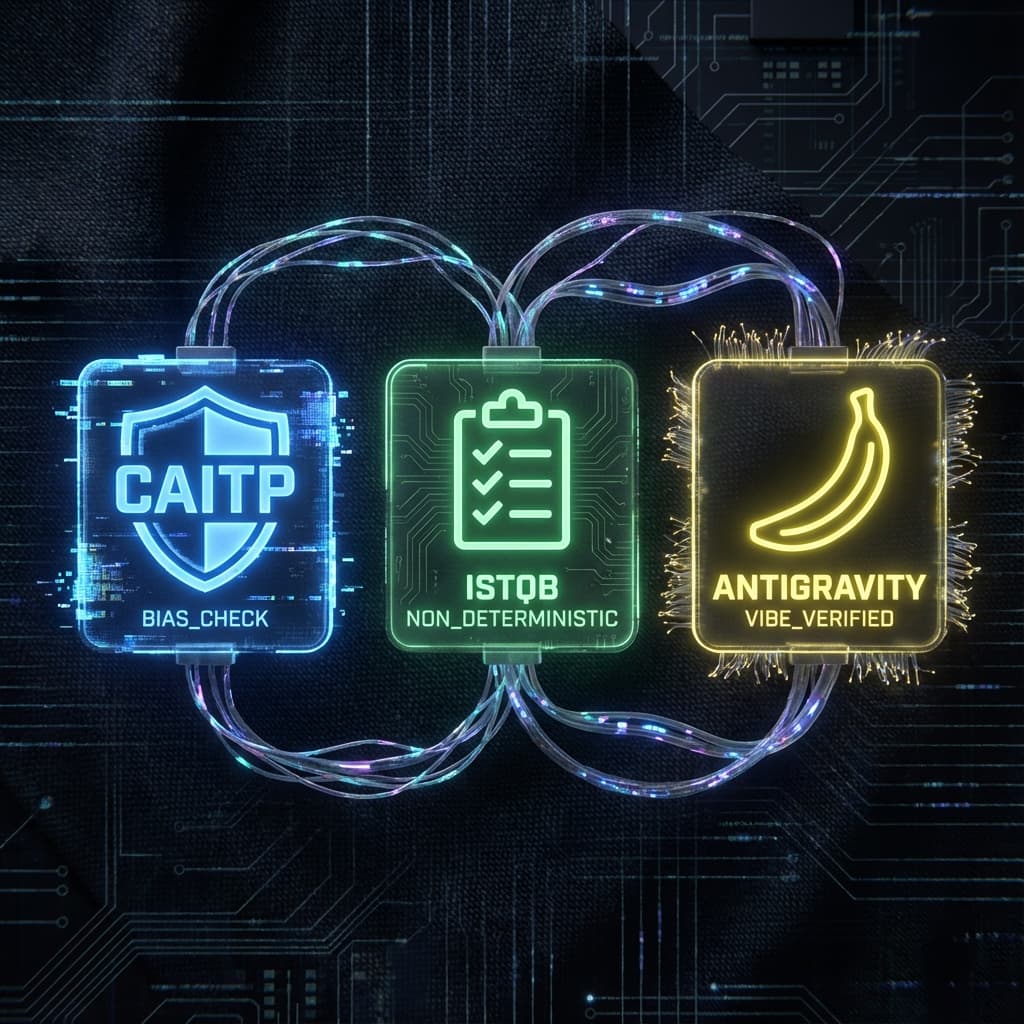
Alright, buckle up buttercups, because we're about to dive headfirst into the clicky, clacky world of mechanical keyboards, AI overlords, and maybe, just maybe, a future where our keyboards can write better articles than we can. (Spoiler alert: they're already close).
Key Takeaways
- The Big Shift: How Agentic AI is changing the game.
- Actionable Insight: Immediate steps to secure your AI Privacy.
- Future Proof: Why Local LLMs are the ultimate privacy shield.
THE COVER STORY: "OpenAI Announced GPT-5.2 (Garlic)"
Alright folks, gather 'round the digital campfire! OpenAI just dropped a bombshell (or, more accurately, a garlic clove) on us! That's right, on December 11th, 2025, they officially unleashed GPT-5.2, and it was apparently codenamed "Garlic" during development. This isn't just your run-of-the-mill update, this is a serious piece of kit aimed at enterprise-level coding and those fancy "agentic workflows." According to OpenAI, GPT-5.2 is their "most capable model series yet.”
What's under the hood? We're talking a whopping 400,000-token context window. That's like reading the entire "Lord of the Rings" trilogy and still having room for "The Hobbit"! It also boasts a 128,000-token output capacity, meaning it can generate entire applications or re-write your terrible technical documentation in one go. Talk about efficiency!
Apparently, this release came hot on the heels of Google's Gemini 3 flexing its AI muscles, prompting a "code red" at OpenAI, as revealed by CEO Sam Altman. While OpenAI denies the accelerated release was solely due to Google, the timing is, shall we say, suspect. Some sources are saying that OpenAI had this “Garlic” model in its back pocket for a while.
GPT-5.2 comes in three tasty flavors: Instant, Thinking, and Pro, so you can choose the right level of AI-powered assistance for your needs. But remember, even with all this power, Altman himself admits it can't do everything. So, maybe don't fire your graphic designer just yet.
THE CREDENTIALS: A Deep Dive into AI Model Testing Credentials and AGI Certification
So, the robots are getting smarter, faster, and… well, still not particularly good at empathy. But how do we know these AI models are, you know, safe? That's where AI model testing credentials and AGI certification come in. It's all about making sure these digital brains are up to snuff before they start making decisions that impact our lives.
AI Model Evaluation Certification is a formal process of assessing AI models against predefined standards, ensuring they perform as intended, are free from biases, and adhere to ethical guidelines.
What do these certifications mean? They're supposed to guarantee a certain level of:
- Accuracy: Does the model actually work?
- Fairness: Is it biased against any particular group?
- Transparency: Can we understand how it makes decisions?
- Robustness: Can it handle unexpected inputs or adversarial attacks?
- Compliance: Does it adhere to relevant regulations and ethical principles?
Are we victims? Maybe. Maybe not. Certifications aren't a perfect solution, but they are a crucial step in ensuring AI is developed and deployed responsibly. Without them, we're basically handing over the keys to the digital kingdom and hoping for the best.
Join the Vibe Coder Resistance
Get the "Agentic AI Starter Kit" and weekly anti-hype patterns delivered to your inbox.
Join the Vibe Coder Resistance
Get the "Agentic AI Starter Kit" and weekly anti-hype patterns delivered to your inbox.
Join the Vibe Coder Resistance
Get the "Agentic AI Starter Kit" and weekly anti-hype patterns delivered to your inbox.
MIXTURE OF EXPERTS: We Are Firm Believers
Okay, now for some AI deep-dive goodness! We're talking about Mixture of Experts (MoE). Imagine instead of one giant brain trying to do everything, you have a team of specialists, each focusing on a particular area. That's MoE in a nutshell.
In MoE, the model is divided into multiple specialized sub-networks (the "experts"), each trained to handle specific types of data or tasks. These experts work under a "gating network" that selects and activates the most relevant experts for each input.
Why is this cool? Because it allows for massive models with trillions of parameters without melting the servers. It improves efficiency by activating only the experts needed for each input.
We are firm believers in the power of MoE. It's the key to unlocking the next level of AI capabilities without bankrupting the planet with energy consumption.
Fun History Section
Did you know the concept of Mixture of Experts isn't some shiny new invention? Nope! The idea was first introduced way back in 1991 by Robert Jacobs and Geoffrey Hinton in their paper "Adaptive Mixtures of Local Experts." They proposed dividing tasks among smaller, specialized networks to reduce training times and computational requirements. So next time someone tries to tell you AI is all hype, remind them that some of these concepts are older than the internet!
MEMORY_INTEGRITY_CHECK
Match the data pairs before your context window collapses.
THE VERDICT: Strategic Advice
So, where does all this leave us? Drowning in a sea of clicky keyboards and increasingly intelligent AI? Possibly. But here's the strategic advice you need:
- Embrace the Mechanical Keyboard: Find the switch that speaks to your soul. (Or at least doesn't drive your coworkers insane.)
- Demand Responsible AI: Support organizations and initiatives that promote ethical AI development and deployment. Ask the hard questions about bias, transparency, and accountability.
- Learn About AI: You don't need to become a machine learning expert, but understanding the basics will help you navigate this rapidly changing world.
- Don't Panic: The robots aren't taking over just yet. But it's time to start thinking critically about the role of AI in our lives.
Now go forth and code (or write, or design, or whatever it is you do) with confidence! And remember, even if the AI does eventually write better articles than us, we'll still have our superior taste in keycaps. Probably.
Build Your Own Agentic AI?
Don't get left behind in the 2025 AI revolution. Join 15,000+ developers getting weekly code patterns.