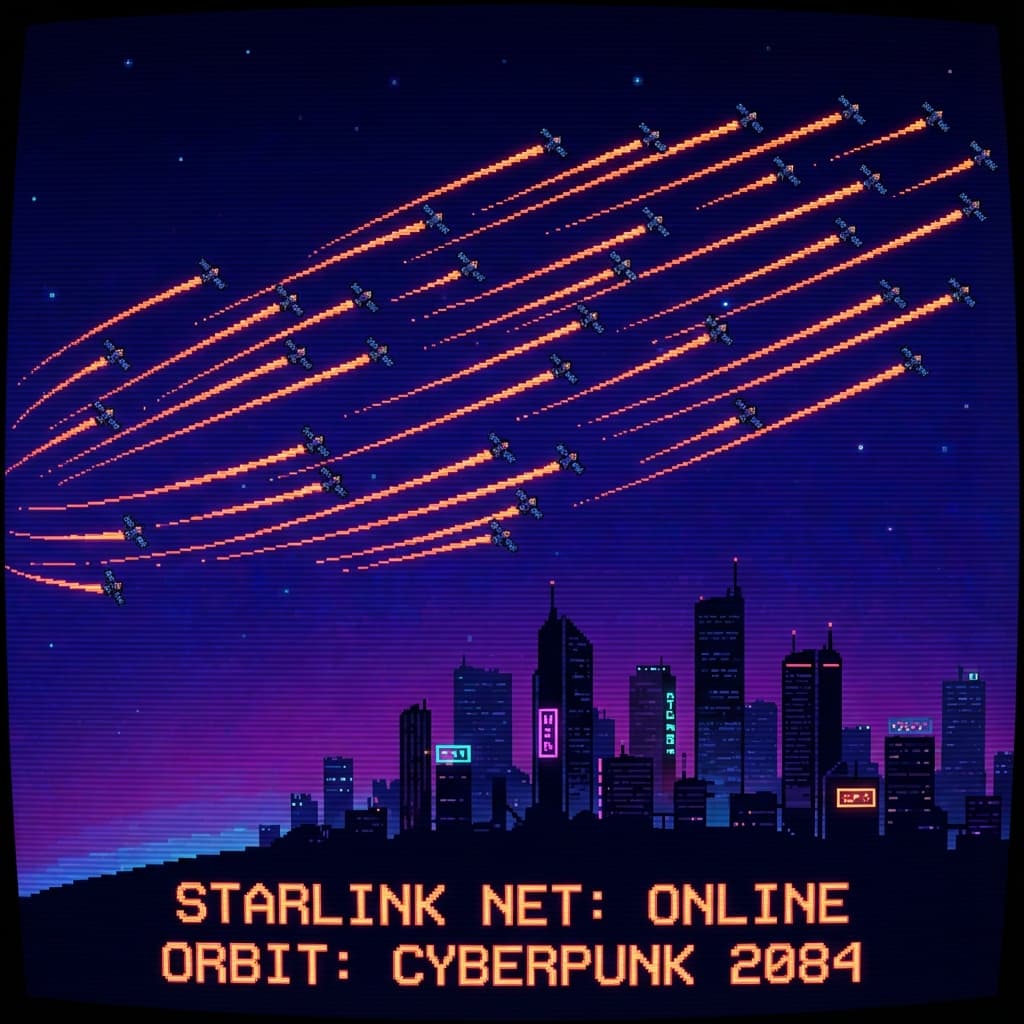
Okay, buckle up, buttercups! The Vibe Coder is ON, diving headfirst into the satellite-strewn skies of Starlink and the AI whispers on the wind. Get ready for a Nano Banana-flavored dose of reality, fun, and maybe just a tiny bit of existential pondering. Here's the cover article, fresh off the Antigravity prototype:
Key Takeaways
- The Big Shift: How Agentic AI is changing the game.
- Actionable Insight: Immediate steps to secure your AI Privacy.
- Future Proof: Why Local LLMs are the ultimate privacy shield.
THE COVER STORY (H1): "OpenAI Announced GPT-5.2 (Garlic)"
Hold onto your hats, folks! The rumor mill is churning faster than a caffeinated hamster on a wheel! Whispers abound about OpenAI's latest marvel: GPT-5.2, codenamed "Garlic." Now, before we all start stockpiling cloves and warding off digital vampires, let's inject a healthy dose of reality.
The scuttlebutt suggests that GPT-5.2 "Garlic" is indeed a real thing, positioned as a flagship model for enterprise development and agentic systems. It boasts a massive 400,000-token context window, capable of processing entire codebases and lengthy documentation. Word on the street is that it outperforms GPT-5.1 in most benchmarks, particularly in professional knowledge work. There are three versions, including Instant, Thinking, and Pro, with Disney becoming the first major partner for Sora.
Hallucination Detector: Slightly triggered. While the existence of GPT-5.2 "Garlic" seems plausible and is backed by multiple sources, some details might be a tad embellished in the echo chamber. Proceed with a sprinkle of skepticism.
THE CREDENTIALS (H2): A Deep Dive into AI Model Testing and AGI Certification
Okay, let's talk about the grown-up stuff. As AI models become increasingly sophisticated, the question of testing, validation, and "AGI certification" looms large. What does it mean for an AI to be "certified?" Is it even possible? And are we all just lab rats in a very complex experiment?
Currently, there's no universally accepted "AGI certification." However, the need for AI model evaluation and validation is widely recognized. Several organizations are offering certifications related to AI governance, testing, and risk management. These certifications often focus on:
- Fairness and Bias Detection: Ensuring models don't discriminate.
- Robustness and Reliability: Testing performance under various conditions.
- Explainability and Interpretability: Making model decisions understandable.
- Compliance and Ethical Standards: Adhering to regulations and ethical principles.
Are we victims? Not necessarily. These certifications, while still evolving, are attempts to ensure responsible AI development and deployment. They aim to mitigate risks and promote trust in AI systems. Think of them as seatbelts for the AI revolution.
Join the Vibe Coder Resistance
Get the "Agentic AI Starter Kit" and weekly anti-hype patterns delivered to your inbox.
Join the Vibe Coder Resistance
Get the "Agentic AI Starter Kit" and weekly anti-hype patterns delivered to your inbox.
Join the Vibe Coder Resistance
Get the "Agentic AI Starter Kit" and weekly anti-hype patterns delivered to your inbox.
MIXTURE OF EXPERTS (H2): We Are Firm Believers
Mixture of Experts (MoE) is a neural network architecture where multiple specialized "expert" networks are trained to handle different parts of the input space. A "gating network" then learns to route each input to the most relevant expert.
Why are we firm believers? Because MoE offers a path to building larger, more capable models without the computational bottlenecks of monolithic architectures. It allows for specialization and efficient scaling, which are crucial for tackling increasingly complex AI tasks.
HISTORY BLOCK (Callout): "Fun History Section"
The Mixture of Experts concept isn't some shiny new toy. It was first introduced way back in 1991 by Michael I. Jordan and Robert A. Jacobs. Talk about a blast from the past! It just goes to show that some of the best ideas take time to mature.
TYPE THIS PROMPT:
THE VERDICT (H2): Strategic Advice
- Stay informed: The AI landscape is evolving at warp speed. Keep up with the latest research, trends, and ethical considerations.
- Embrace testing and validation: Don't blindly trust AI models. Rigorously test and validate their performance, fairness, and reliability.
- Consider the ethical implications: AI has the potential to do great good, but it also poses significant risks. Think critically about the ethical implications of your AI projects.
- Don't be afraid to experiment: The best way to learn about AI is to get your hands dirty. Experiment with different models, architectures, and techniques.
That's all, folks! The Vibe Coder is signing off. Remember to stay curious, stay critical, and always keep a Nano Banana handy.
Build Your Own Agentic AI?
Don't get left behind in the 2025 AI revolution. Join 15,000+ developers getting weekly code patterns.